That dull ache in your lower back after a long meeting. The persistent tightness in your neck as you power through deadlines. The tension headache that appears like clockwork mid-afternoon. If you’re a Calgary office worker, you know this feeling all too well. You might chalk it up to simply having “bad posture” and try to sit up straighter, only to find yourself slouching again moments later.
The reality is that posture is far more complex than just sitting up straight. For countless professionals across Calgary—from the downtown core to home offices in the suburbs—prolonged sitting creates a cascade of interconnected issues throughout the entire body. This isn’t just about looking tired; it’s a silent drain on your energy, focus, and long-term health.
Rather than treating pain as an isolated problem, osteopathy offers a different perspective, viewing the body as an interconnected system where the root cause of your discomfort might originate from a completely different area than where you actually feel it. It’s time to look beyond “bad posture” and understand how to truly rebalance your spine. Book an assessment with La Vita Osteo to start your journey toward lasting relief.
What Is Bad Posture?
The term “bad posture” is often used as a catch-all for any position that isn’t perfectly upright. However, it’s more accurate to think of posture as a dynamic state, not a fixed position. As one Calgary-based osteopathic therapist puts it, “the concept leads to limiting belief systems like ‘I’ve had bad posture all my life’… This prevents positive changes.”
Biomechanically, postural issues arise when certain muscle groups become shortened and tight, while others become overstretched and weak. This creates imbalances that pull the body out of its natural alignment. Researchers identify four primary types of posture outside the “ideal” one. Most of us fall into one or more of these categories:
Anterior Head Carriage (Forward Head Posture): Often called “tech neck,” this occurs when the head juts forward in front of the shoulders. For every inch your head moves forward, its effective weight on your spine increases by about 10 pounds, placing immense strain on your neck muscles and cervical spine.
Kyphotic Posture (Rounded Shoulders): This involves the shoulders rolling forward, creating a C-shape in the upper spine. It’s common among those who spend hours at a keyboard, leading to tight chest muscles and weakened upper back muscles.
Lordotic Posture: An exaggerated inward curve in the lower back, often accompanied by a pelvis that tilts too far forward. This places excessive pressure on the lumbar spine and contributes to lower back pain.
Why Desk Workers Commonly Experience Spinal Imbalances
Modern work demands that we spend hours in a seated position, often hunched over a screen. This isn’t natural for our bodies, which evolved to move. In fact, the human body was designed to move, not to remain static for eight hours a day. Today, many Calgary professionals spend more time sitting than sleeping, and this fundamental shift has profound consequences. The result? Bad posture becomes the new normal, silently setting the stage for neck pain, back tension, and a host of other interconnected issues that can affect every aspect of daily life.
Prolonged sitting leads to a chain of biomechanical consequences:
Pelvic Immobility: Sitting shifts your pelvis into a posterior tilt, flattening the natural curve of your lower back. A study found that just 30 minutes of sitting caused a significant increase in posterior pelvic tilt.
Tight Hip Flexors: These muscles at the front of your hips become shortened and tight from being in a flexed position all day. The psoas major, a deep hip flexor, becomes particularly tight, pulling on the lower back.
Weak Core and Glute Muscles: Your gluteal muscles “shut down” due to lack of use, and your core muscles weaken, reducing their ability to support your spine. This forces other muscles to work harder to compensate.
Discover how osteopathic care can help you break free from the cycle of pain and restore your body’s natural alignment.
How Prolonged Sitting Affects the Pelvis, Hip Flexors, and Thoracic Spine
To understand the full-body impact of sitting, we need to look at these specific areas in more detail. Bad posture often begins here, as the body is a chain of interconnected parts; a restriction in one area will force compensation elsewhere, creating a domino effect of dysfunction.
The Locked Pelvis
Your pelvis is the foundation of your spine. When you sit, it tilts backward, flattening the natural arch of your lower back. This position places enormous stress on the lumbar spine. Over time, this can lead to lower back pain, hip pain, and even sciatica. In Calgary, where many of us commute long distances, this pelvic immobility is compounded.
Tight Hip Flexors
The hip flexors attach to your lumbar spine and the front of your thigh. When you sit, these muscles are in a shortened position. Over time, they become tight. Tight hip flexors can pull on your lower back, exacerbating pelvic tilt and leading to pain. They also inhibit the function of the gluteal muscles, creating a cycle of dysfunction.
The Stiff Thoracic Spine
Your thoracic spine is designed to rotate and extend. However, when you hunch forward over a desk, it becomes stiff and locked in a flexed position. A stiff thoracic spine forces your neck and lower back to over-mobilize, creating pain in those areas. This is a classic example of how pain in one area originates from dysfunction in another.
Understanding these connections is the first step. Book your comprehensive osteopathic assessment at La Vita Osteo and let our team map out a path to recovery.
Common Signs Your Body Is Out of Balance
Your body is constantly sending you signals. Pain is often the last sign of a problem, appearing only after imbalances have been developing for a long time. Bad posture is a silent contributor to these issues. Look out for these common signs:
Neck and Shoulder Tension: A feeling of constant tightness, especially at the base of the skull and between the shoulder blades.
Lower Back Pain: A dull ache that worsens after sitting, especially when you stand up.
Frequent Headaches: Often starting at the base of the skull and radiating forward, these are tension headaches or cervicogenic headaches.
Reduced Mobility: Feeling stiff when you try to turn your head or twist your torso.
Hip Stiffness: A feeling of tightness in the front of your hips when you stand up after sitting.
Fatigue and Low Energy: Poor posture can compress your diaphragm, leading to shallow breathing and decreased oxygen intake.
Schedule a consultation today and take the first step toward understanding what your body is trying to tell you.
How Osteopathic Treatment Addresses the Root Cause
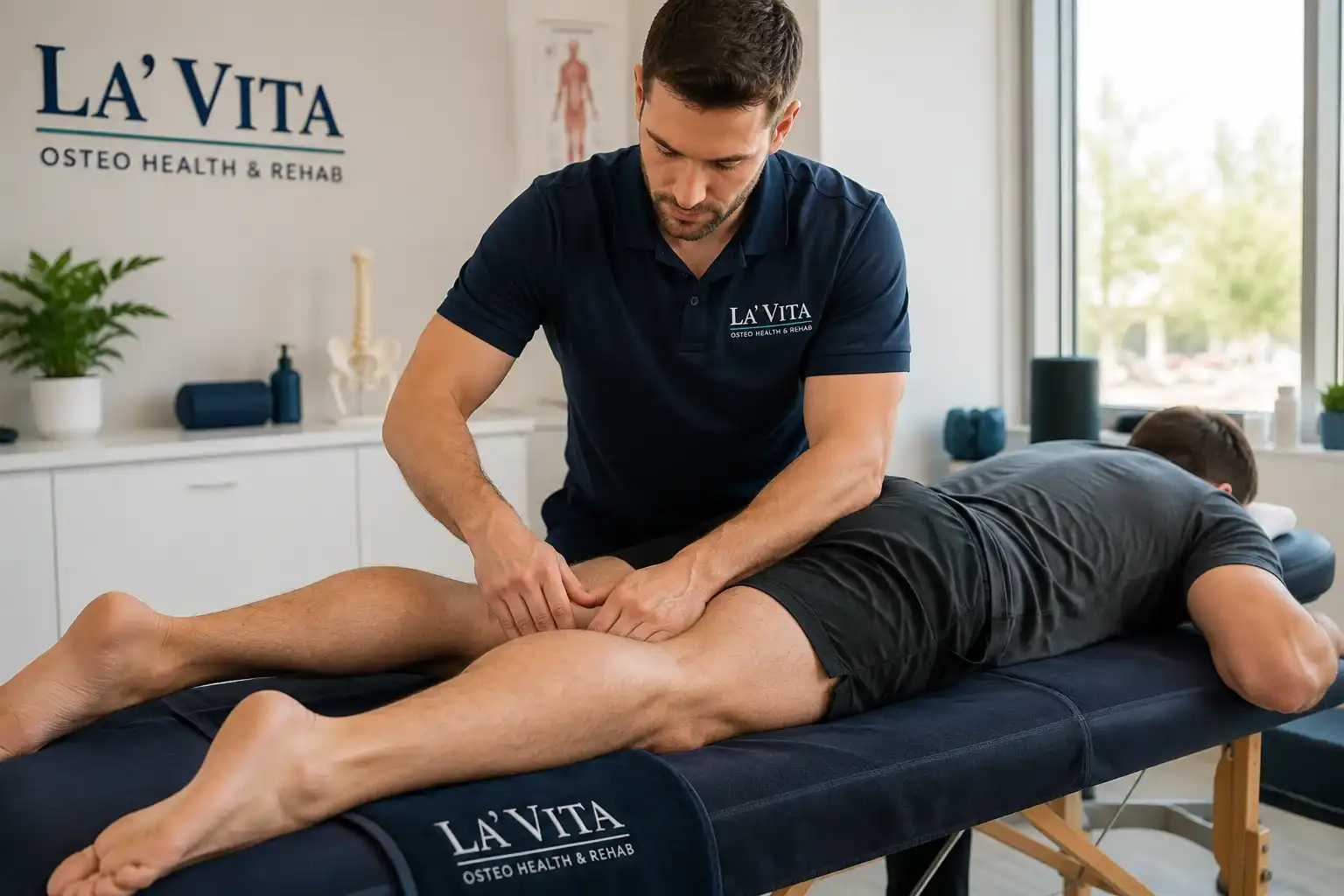
Osteopathic Manual Therapy is a hands-on, patient-centered approach to healthcare. It focuses on the relationship between the body’s structure and its function, using a variety of manual techniques to promote health and well-being. It seeks to identify and address the root cause of pain, rather than just treating symptoms.
The Holistic, Interconnected Approach
Instead of looking at your neck pain in isolation, an osteopath will assess your entire body to understand the chain of events that led to your symptoms. They understand that a forward head could be related to a tight hip flexor, a stiff thoracic spine, or even a dysfunctional diaphragm.
Techniques Used
Osteopaths use a wide range of gentle hands-on techniques:
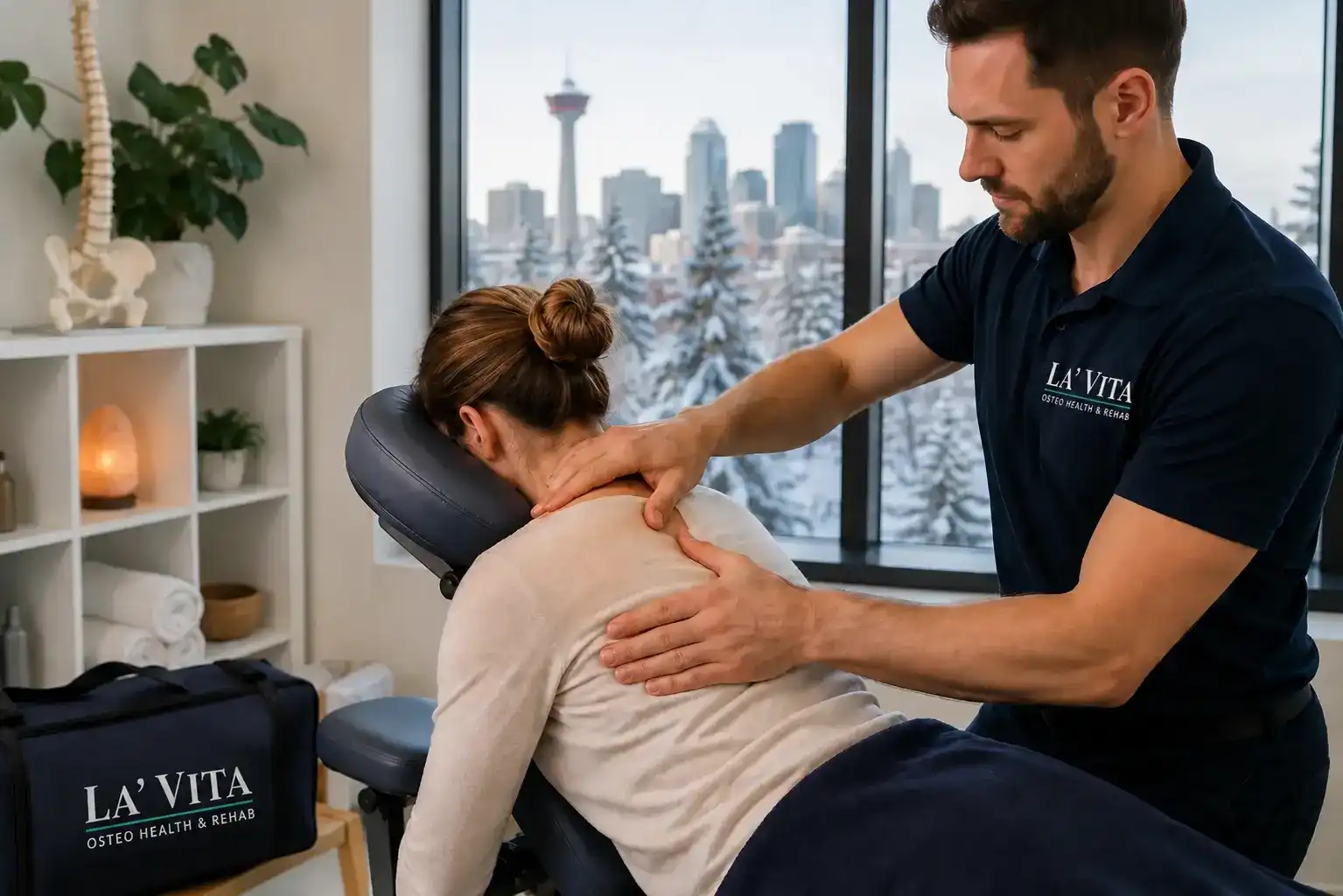
Soft Tissue Manipulation: To release tight, tense muscles and improve circulation.
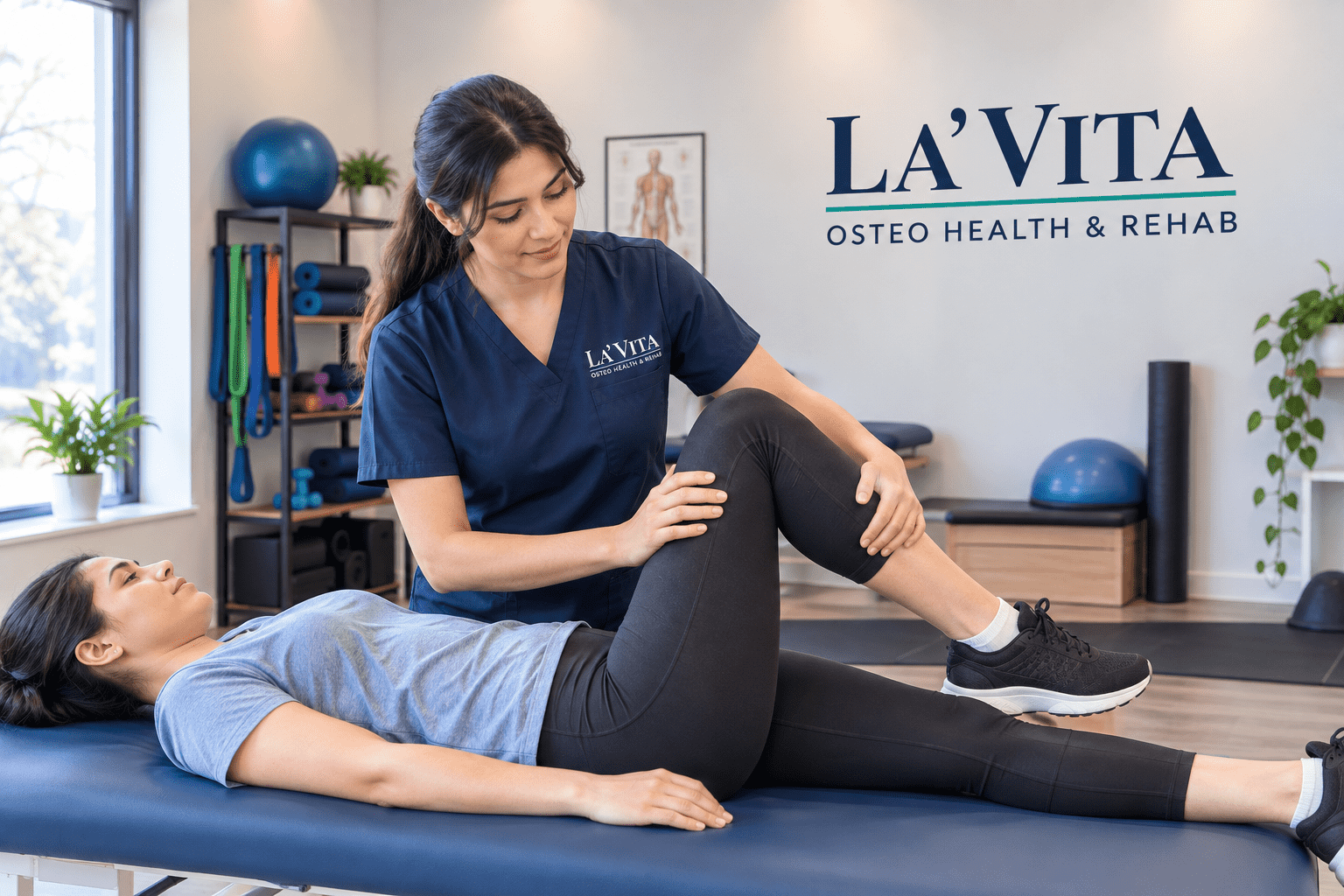
Joint Mobilization: To improve range of motion in restricted joints, such as a stiff thoracic spine.
Myofascial Release: To release tension in the fascia, the connective tissue that surrounds muscles.
Craniosacral Therapy: To address imbalances in the craniosacral system, helpful for headaches.
Visceral Osteopathy: To address tension in internal organs that affect posture.
By identifying and treating the primary restrictions and imbalances, osteopathy helps the body return to a state of balance. Explore our osteopathic services and see how we can help you achieve lasting wellness.
Daily Habits to Improve Posture and Prevent Pain
True postural change requires a combination of treatment and self-care. Here are some daily habits you can adopt:
Ergonomics
Evaluate your workspace. Your workstation is the primary environment where postural habits are formed:
Monitor Height: The top of your screen should be at or slightly below eye level.
Chair Support: Your feet should be flat on the floor, and your knees should be at or slightly below hip level. Ensure your lower back has adequate lumbar support.
Keyboard and Mouse: Position these close to you so your elbows are at a 90-degree angle and your wrists are straight.
Movement and Microbreaks
Your “best” posture is your next posture:
Take Microbreaks: Every 30 minutes, stand up, stretch, and walk around for a minute or two.
Change Your Position: Alternate between sitting and standing if you have a standing desk.
Move During Calls: Pace around during phone calls instead of sending an email.
Simple Exercises and Stretches
Perform these exercises at your desk:
Chin Tucks: Sit tall and gently pull your chin straight back. Hold for 5 seconds. Repeat 10 times.
Shoulder Blade Squeezes: Squeeze your shoulder blades together. Hold for 5-10 seconds.
Doorway Chest Stretch: Stand in a doorway and place your forearms on the frame. Step forward until you feel a gentle stretch.
These habits are powerful, but they work best when combined with professional care. Contact La Vita Osteo to learn how we can complement your self-care routine.
When to Seek Professional Osteopathic Care
While daily habits are crucial, sometimes professional help is needed. If you recognize any of these signs, it might be time to book an appointment:
Persistent Pain: Pain that doesn’t go away with rest, stretching, or over-the-counter pain relievers.
Chronic Stiffness: Feeling constantly stiff, even after waking up or moving around.
Reduced Mobility: A significant decrease in your ability to turn your head, twist your torso, or bend over.
Referred Pain: Pain that seems to travel, like tingling in your hands or headaches from your neck.
No Improvement: You’ve tried changing your habits, but your symptoms persist.
Osteopathy can be particularly effective for desk workers in Calgary, as it addresses the unique stressors of modern, sedentary life. Book your appointment with La Vita Osteo today and start your journey toward a pain-free life.
FAQs
1. Is “bad posture” a real medical diagnosis?
No, it’s a general term used to describe any posture that places undue stress on the body. It’s more helpful to think of postural imbalances that can be addressed and improved.
2. What is the difference between osteopathy and chiropractic care?
Osteopathy takes a more holistic, whole-body approach, viewing the body as a connected unit. Osteopathic techniques are gentler and broader, including soft tissue and visceral manipulation.
3. Why does my lower back hurt after sitting for only a short time?
Prolonged sitting causes a posterior pelvic tilt, flattening the natural curve of your lower back and increasing stress on the lumbar spine.
4. How long does it take for osteopathy to help with posture?
Many clients experience noticeable improvements after 1–3 sessions. However, treatment plans are highly individualized.
5. What conditions do Calgary osteopaths commonly treat?
Osteopaths in Calgary treat back and neck pain, headaches, sciatica, TMJ dysfunction, sports injuries, and posture issues.
6. Is osteopathic treatment painful?
Osteopathic treatment is generally gentle and non-invasive. You may experience some mild discomfort as the osteopath works on tight areas, but it should not be painful. Many patients find the treatment relaxing.
7. Can osteopathy help with headaches?
Yes, osteopathy can be very effective for headaches, particularly tension headaches and cervicogenic headaches that originate from the neck.
Have more questions? Reach out to us for personalized answers and guidance.
Conclusion
The aches, pains, and stiffness experienced by so many Calgary desk workers are not a life sentence. They are the body’s signal that something needs to change. By understanding that “bad posture” is actually the result of a complex web of imbalances, we can start to address the root cause of our discomfort.
Your body has an incredible capacity for healing. With the right guidance and treatment, you can break free from the cycle of pain and rediscover what it feels like to move with ease. Whether you’re a downtown professional, a remote worker, or a student, you deserve to feel your best.
At La Vita Osteo, we take a holistic approach to health, focusing on the interconnectedness of the body to identify and treat the underlying causes of your pain. We believe in restoring balance, mobility, and overall well-being.
Book your comprehensive assessment with La Vita Osteo today and discover the difference that whole-body, root-cause care can make. Let us help you move beyond “bad posture” and reclaim a life of comfort, vitality, and balance.