It’s a scenario many Calgary parents know well. Your child wakes up in the middle of the night complaining of aching legs. Or they come home from a day at the playground limping slightly, saying their knee hurts. You wonder: is this normal? Is it just growing pains? Or is something else going on?
These questions are common, and the answers aren’t always straightforward. Growing pains in children are a well-known phenomenon, but not every ache or pain is simply a part of growing. Understanding the difference between typical developmental discomfort and possible structural or mechanical strain can help you respond appropriately and know when to seek professional guidance.
This guide is designed to help you navigate these concerns with confidence. We’ll explore what growing pains actually are, how they differ from mechanical strain, and when an assessment might be beneficial for your child.
What Are Growing Pains in Children?
Growing pains are a common complaint in childhood, typically affecting children between the ages of 3 and 12. Despite the name, there’s no evidence that these pains are actually caused by bones growing. Instead, they’re thought to be related to muscle fatigue or changes in activity levels.
Typical features of growing pains in children include:
- Pain in both legs, usually in the thighs, calves, or behind the knees
- Pain that occurs in the late afternoon or evening
- Pain that may wake a child from sleep
- Pain that resolves by morning
- No visible swelling, redness, or warmth
- No limping or difficulty walking
- Pain that comes and goes over weeks or months
Growing pains are generally harmless and don’t require treatment beyond comfort measures like gentle massage, warmth, or stretching. They tend to resolve on their own as children get older.
However, it’s important to understand that the term “growing pains” is often used loosely. Not all childhood leg, hip, or knee pain fits this pattern. Some discomfort may have a different cause—one that benefits from assessment and support.
If you’re concerned about your child’s discomfort, explore our osteopathic therapy services at La Vita Osteo to learn how we can help.
Not every child experiences growing pains in children the same way. Some feel mild aching, while others have discomfort that disrupts sleep. Tracking when pain occurs and how long it lasts can help you understand your child’s patterns.
Growing Pains vs. Structural or Mechanical Strain
While growing pains are a normal part of development for many children, some musculoskeletal discomfort arises from mechanical or structural strain. This type of pain has different characteristics and may require a different approach.
Mechanical or structural strain may present with:
- Pain that is one-sided or localized to a specific joint
- Pain that persists during the day, not just at night
- Pain that worsens with activity
- Visible swelling, redness, or warmth around a joint
- Limping or changes in walking patterns
- Reduced range of motion in a joint
- Pain that follows a specific injury or fall
- Pain that doesn’t improve with rest or comfort measures
During rapid growth spurts, a child’s bones, muscles, and connective tissues may grow at different rates. This can create temporary imbalances that affect movement patterns and coordination. The hips, pelvis, and knees are particularly vulnerable during these periods because they’re central to how a child moves and bears weight.
An assessment by a qualified practitioner can help identify whether your child’s discomfort is related to normal development or something that may benefit from support.
How Growth Spurts Can Affect the Hips, Pelvis, and Knees
Growth spurts are periods of rapid physical change. During these times, a child’s height can increase significantly in a short period, and their body must adapt to these changes.
What happens during a growth spurt:
The long bones of the legs grow rapidly, which can temporarily change the angle of the hip joint and alter how weight is distributed through the pelvis and knees. Muscles and tendons may become relatively tight as they lag behind bone growth. Coordination and balance may shift as the child adjusts to their new proportions.
These changes can sometimes contribute to:
- Temporary stiffness or discomfort around the hips
- Changes in walking or running patterns
- Increased vulnerability to minor strains during activity
- Reduced flexibility in the legs and lower back
While these changes are normal, they can sometimes create areas of tension or movement restriction that persist. This is where gentle osteopathic support may be helpful.
During growth spurts, muscles and tendons may lag behind bone growth, creating tightness and altered movement. This can sometimes feel like growing pains in children, but may actually stem from mechanical strain that benefits from assessment.
Can Minor Playground Falls Cause Mechanical Strain?
Absolutely. Childhood is full of tumbles, trips, and falls—and while most are harmless, some can leave behind residual strain that affects how a child moves.
A minor fall on the playground might not cause immediate pain, but it can create compensation patterns. A child might favor one leg slightly, shift their weight differently, or alter their posture to avoid discomfort. Over time, these compensations can lead to tension elsewhere in the body.
Common scenarios include:
- Falling off a swing or slide and landing on the hips or bottom
- Tripping while running and twisting a knee or ankle
- Landing awkwardly during sports or play
- Repetitive movements in a specific sport that strain growing joints
If your child has had a fall and seems to be moving differently—even if they’re not complaining of pain—an assessment can help identify any underlying issues before they become more significant.
If your child is recovering from a minor injury or seems to be moving differently, our active rehabilitation services can support their recovery.
Warning Signs Parents Should Not Ignore
While many childhood aches are benign, some signs warrant prompt medical evaluation. Please seek advice from a pediatric healthcare professional if your child experiences:
- Persistent pain that lasts more than a few days or continues to worsen
- Severe pain that interferes with sleep or daily activities
- One-sided pain that is consistently localized to one area
- Visible swelling, redness, or warmth around a joint
- Fever along with joint or bone pain
- Unexplained weight loss or fatigue
- Difficulty walking or a noticeable limp
- Weakness in the legs or arms
- Nighttime pain that is unusual, severe, or persistent
- Pain following a significant injury such as a fall from height
- Any other symptoms that concern you
These signs do not necessarily indicate a serious problem, but they do warrant professional evaluation to rule out conditions that require medical treatment.
How an Osteopathic Assessment May Help
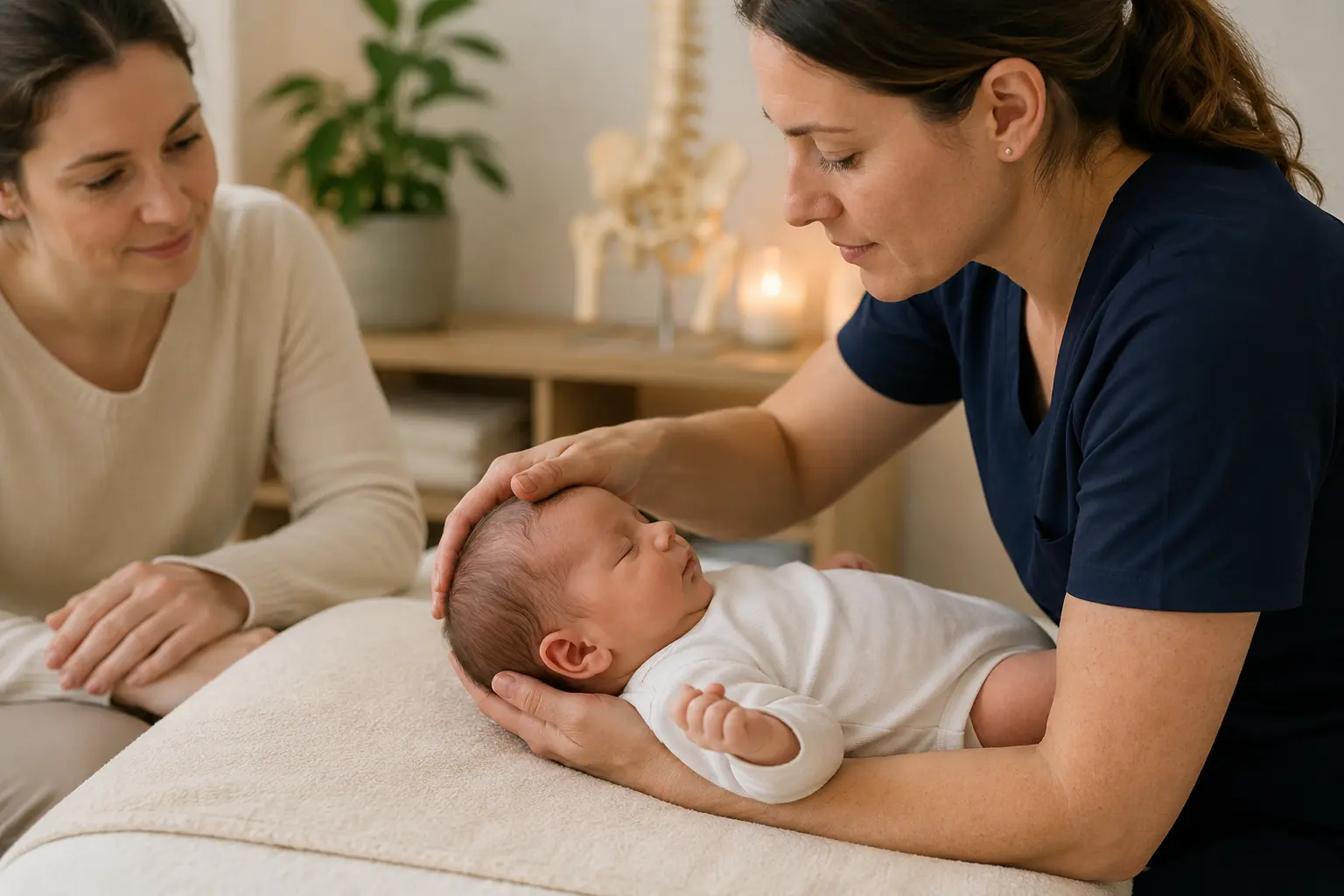
An osteopathic assessment for a child is gentle, thorough, and child-friendly. The practitioner will begin by taking a detailed history—including birth history, growth patterns, activity levels, and any injuries or falls.
The assessment typically includes:
- Observation of posture, walking, and movement patterns
- Gentle palpation to identify areas of tension or restriction
- Assessment of joint mobility in the hips, pelvis, knees, and spine
- Evaluation of muscle balance and coordination
The goal is not to diagnose a medical condition but to understand how your child’s body is functioning and whether there are areas of mechanical strain that could be contributing to discomfort.
If appropriate, the practitioner may use gentle osteopathic techniques to support relaxation, improve mobility, and encourage the body’s natural ability to find balance. Techniques are always adapted to the child’s age, size, and comfort level.
Learn more about our osteopathic therapy services and how we support children’s health.
Gentle Support for Children’s Movement and Recovery
Osteopathy for children is characterized by its gentleness. There is no forceful manipulation, no cracking, and no aggressive movements. Instead, practitioners use light touch, gentle holds, and subtle movements to encourage the body to release tension and restore balance.
Supportive approaches may include:
- Gentle soft tissue techniques to release muscle tension
- Cranial techniques to support relaxation and nervous system balance
- Joint mobilization to improve mobility in restricted areas
- Movement guidance to support healthy movement patterns
- Advice on activity modification and home exercises
Many children find osteopathic sessions relaxing—some even fall asleep during treatment. The goal is to support the child’s body in its natural healing process, not to force change.
Parents often ask whether growing pains in children need treatment or resolve on their own. While many improve with time, some children benefit from gentle support for movement restrictions or muscle tension. An assessment can clarify whether the pain is developmental or mechanical.
Our kinesiology services can also support children’s movement development and coordination.
When to See a Pediatric Healthcare Professional
Osteopathy is a complementary approach and should never replace pediatric medical care. If your child has concerning symptoms, always seek medical evaluation first.
Seek pediatric care if your child has:
- Persistent, severe, or worsening pain
- Any of the warning signs listed above
- Pain that limits their ability to walk, play, or participate in daily activities
- A known injury that isn’t healing as expected
Once serious conditions have been ruled out, osteopathic support may be appropriate as part of a comprehensive approach to your child’s comfort and mobility.
Many cases of growing pains in children resolve on their own, but persistent or recurring discomfort should never be ignored. If your child avoids activities they enjoy or moves differently, an assessment can provide clarity and peace of mind.
FAQs
1. What age do growing pains typically affect?
Growing pains in children most commonly affect those between 3 and 12 years old. They often occur during periods of rapid growth.
2. How can I tell if my child’s pain is growing pains or something else?
Growing pains typically affect both legs, occur in the evening or night, resolve by morning, and have no visible swelling or limping. Pain that is one-sided, persistent, activity-limiting, or accompanied by swelling or other symptoms may require assessment.
3. Can osteopathy help with growing pains in children?
Osteopathy may help address mechanical strain or movement restrictions that contribute to discomfort. However, it does not cure growing pains or change a child’s growth. It is a supportive approach for musculoskeletal concerns.
4. Is osteopathy safe for children?
Yes, when performed by a qualified practitioner with training in pediatrics. Techniques are gentle and adapted to the child’s age and needs.
5. What should I expect during my child’s first osteopathic appointment?
The first appointment includes a detailed history, observation of movement, gentle assessment, and possibly treatment. Children often find the experience relaxing.
6. Do I need a referral for my child to see an osteopath?
You typically don’t need a referral. However, it’s always a good idea to keep your child’s pediatrician informed.
7. When should I be concerned about my child’s leg pain?
Seek medical advice if pain is persistent, severe, one-sided, worsening, or accompanied by swelling, fever, limping, weakness, or other concerning symptoms.
Conclusion
Navigating childhood aches and pains can be challenging for parents. While growing pains in children are a normal part of development for many, not every discomfort is simply a sign of growth. Understanding the difference between typical growing pains and potential mechanical strain can help you respond appropriately and seek support when needed.
At La Vita Osteo, we understand the concerns of parents in Calgary. Our practitioners provide gentle, child-friendly osteopathic care for appropriate musculoskeletal concerns. We take time to listen, assess, and support your child’s comfort and mobility.
If you’re wondering whether an assessment might benefit your child, we invite you to contact us to discuss your concerns.