You’ve been looking forward to this hike all week. The trailhead is buzzing with energy, the views are spectacular, and you’re feeling strong. But then comes the descent. Each step downhill sends a sharp reminder through your knees that they’re not as prepared as you thought.
Downhill knee pain is one of the most common complaints among hikers, yet it’s often overlooked until it becomes a problem. For Calgary’s outdoor enthusiasts who love exploring the Rocky Mountains—from the trails of Kananaskis to the slopes of Banff—understanding why this pain occurs and how to prevent it can make the difference between a memorable adventure and a painful struggle.
The good news? Downhill knee pain is often preventable. By taking a proactive approach to movement preparation, you can strengthen the muscles and control patterns that protect your knees on the trail. Let’s explore the science behind knee pain on descents and how a pre-hab approach can save your hiking season. Explore our services to learn how professional guidance can help you hike pain-free.
Why Does Downhill Hiking Cause Knee Pain?
Walking downhill places unique demands on your body that are very different from climbing up. When you descend, your quadriceps work eccentrically—they contract while lengthening to control the speed of your knee bending. This eccentric loading can be up to seven times your body weight with each step.
Unlike walking on flat ground, downhill hiking requires continuous braking action. Your muscles must work to decelerate your body weight with every step, creating significant stress on the knee joint. This is why downhill knee pain often emerges during or after a descent, even when the uphill portion felt fine.
Common Causes of Downhill Knee Pain
Downhill knee pain rarely has a single cause. Instead, it typically results from a combination of factors that create a “perfect storm” of stress on the knee.
Weak Eccentric Quadriceps Control: The quadriceps act as your primary “brake” on descents. When they’re not strong enough to control the knee’s bending motion during eccentric loading, the joint takes on more stress, leading to pain and irritation.
Glute Medius Weakness: This often-overlooked muscle on the side of your hip stabilizes your pelvis when you step. If it’s weak, your knee tends to cave inward with each step, creating abnormal tracking and contributing to downhill knee pain.
Limited Mobility: Tight calves, hamstrings, or hip flexors can alter your walking mechanics, forcing compensations that increase knee stress.
Muscle Fatigue: As the hike continues, your muscles tire. When your quads and glutes fatigue, they can no longer protect your knee, making downhill knee pain more likely as the hike progresses.
Why Eccentric Quad Control Matters on Downhill Trails
Eccentric quadriceps control is perhaps the most critical factor in preventing downhill knee pain. Your quads work eccentrically whenever you lower yourself down a step or control a descent.
Research shows that individuals with stronger eccentric quadriceps control experience less downhill knee pain and recover faster after long descents. Think of your quads as shock absorbers—they need to be strong enough to handle the impact of each step while also being controlled enough to prevent the knee from buckling or tracking incorrectly.
How Glute Medius Strength Supports Knee Stability
The gluteus medius is a small but mighty muscle on the side of your hip. Its primary job is to stabilize your pelvis when you stand on one leg—which is exactly what you do with each step on the trail.
A weak glute medius allows the hip to drop on the opposite side, causing the knee to cave inward (valgus collapse). This inward movement places excessive stress on the knee joint and can lead to downhill knee pain over time. When your glute medius is strong, it helps maintain proper knee alignment and reduces the load on your knee structures.
Joint Tracking and Lower-Body Movement Control
Proper joint tracking—the way your knee moves through its natural range of motion—is essential for preventing downhill knee pain. When your knee tracks incorrectly, it creates uneven wear on cartilage and stresses ligaments.
Good joint tracking depends on coordinated activity between your quads, glutes, hamstrings, and calf muscles. Weakness or imbalance in any of these muscles can disrupt tracking. Similarly, limited joint mobility (particularly in the ankle, hip, or thoracic spine) can force the knee to move in ways it wasn’t designed for, contributing to downhill knee pain.
3 Simple Movement Checks You Can Try at Home
The following checks are for general awareness and are not a diagnosis. Stop immediately if you feel pain. If you’re consistently seeing signs of poor control, consider seeking professional assessment.
1. Single-Leg Squat (Shallow)
Stand on one leg next to a wall or chair for support. Slowly lower yourself into a shallow squat, as if sitting back into a chair. Watch your knee alignment—does it track straight over your toes, or does it drift inward (a common issue with downhill knee pain)? Does your hip drop significantly on the standing side? If you see significant drift or wobble, your glute medius may need strengthening.
2. Controlled Step-Down Test
Stand on a low step (6-8 inches). Slowly lower your opposite foot to touch the floor, then return to standing. This mimics the single-leg control of taking a step down a trail. Observe hip stability and knee alignment as you lower. Does the knee drift inward? Is the movement smooth and controlled, or do you wobble? Difficulty controlling this movement predicts a higher risk of downhill knee pain on the trails.
3. Single-Leg Balance Check
Stand on one leg with your eyes open. Time how long you can hold your balance without excessive wobbling. Now try with your eyes closed. Poor balance (especially with eyes closed) indicates reduced proprioception, which can contribute to poor movement control on uneven terrain.
If you notice excessive knee drift, significant wobbling, or feel unstable during these tests, consider working with a professional to develop a pre-hab program. Contact us for a professional assessment.
How Athletic Therapy and Active Rehab Can Help
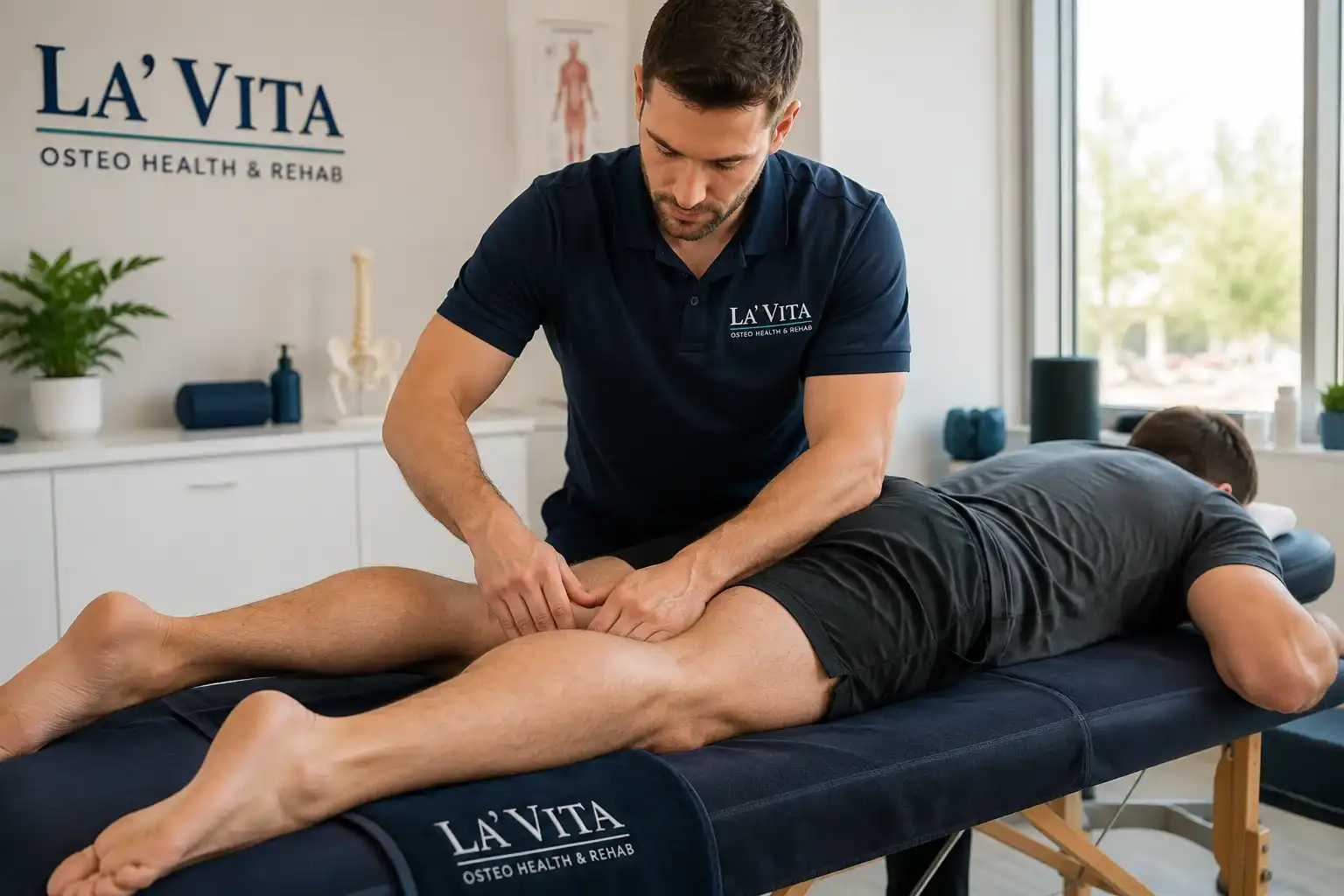
Athletic therapy is a specialized form of rehabilitation that focuses on the diagnosis, treatment, and prevention of musculoskeletal injuries . Athletic therapists are experts in helping you identify movement issues, treat injuries, and—most importantly for hikers—prevent problems before they start.
A certified athletic therapist can design a personalized pre-hab program that includes:
- Targeted strengthening for your quads, glutes, and core
- Mobility work to improve range of motion
- Balance and proprioception training
- Sport-specific movement patterns like step-downs and single-leg control
Active rehabilitation provides the guidance and support needed to prevent downhill knee pain before you hit the trail. Learn more about athletic therapy and how it can support your hiking goals.
How to Prepare Your Knees Before a Hike
1. Build Eccentric Quad Strength
Incorporate exercises like slow step-downs from a low step, wall sits, and controlled lunges. The focus is on the lowering phase—this develops the eccentric strength that protects your knees on descents.
2. Strengthen Your Glute Medius
Include exercises like clamshells, side-lying leg lifts, and single-leg bridges. A strong glute medius helps maintain proper knee alignment and prevents the inward drift that contributes to downhill knee pain.
3. Improve Hip and Ankle Mobility
Tight hips and calves force your knees to compensate. Incorporate regular stretching and foam rolling to maintain good range of motion.
4. Practice Trail-Specific Movements
Train with step-downs, single-leg squats, and balance exercises. These mimic the demands of the trail and prepare your body for the challenges of descending.
5. Progress Gradually
If you’re new to hiking or returning after a break, start with shorter descents and gradually build up. Sudden increases in hiking duration or difficulty are a common trigger for downhill knee pain.
For more tips, visit our blog for articles on hiking preparation and injury prevention.
When to See an Athletic Therapist or Rehabilitation Professional
Seek professional help if:
- You experience downhill knee pain that is persistent, worsening, or sharp.
- Pain is affecting your normal walking or hiking.
- You notice significant swelling, catching, or locking in your knee.
- The self-assessment movement checks reveal poor control and you want to address it.
- You want to prepare for the hiking season and prevent issues from developing.
An athletic therapist can perform a thorough assessment to identify the root causes of your downhill knee pain and create a rehabilitation plan to get you back on the trails.
FAQs
1. Why does downhill knee pain happen?
Downhill knee pain typically occurs because your quadriceps lack the eccentric strength to control the knee’s bending on descents, combined with poor glute medius strength that allows the knee to drift inward . Weak control means more stress on the knee joint.
2. How can I reduce knee pain when hiking downhill?
Strengthen your quads and glutes, especially your glute medius, with exercises like step-downs, clamshells, and single-leg bridges. Additionally, use hiking poles, hike with a shorter stride on descents, and consider professional pre-hab.
3. When should I see an athletic therapist?
If downhill knee pain is persistent, worsens with activity, or is sharp, you should see a professional. Also consider it if poor control is noted in your self-checks. Athletic therapists specialize in managing hiking injuries and can help you return to activity safely .
4. Can I hike if my knees hurt?
Light activity that doesn’t cause pain is usually okay, but persistent or sharp pain requires rest and professional assessment. Attempting to push through significant pain can lead to a more serious injury. Consult a healthcare provider for personalized advice.
5. How long does it take to strengthen knees for hiking?
With a consistent, targeted strengthening program, you can see significant improvements in knee stability and strength in 4-6 weeks. This timeline allows for proper muscle adaptation, but everyone is different.
6. Does La Vita Osteo offer athletic therapy?
Yes! We offer Athletic Therapy, Active Rehabilitation, and Osteopathic Therapy designed to prevent and treat injuries, including downhill knee pain .
Have more questions? Contact our team for personalized answers.
Conclusion
Downhill knee pain doesn’t have to be an inevitable part of your hiking experience. By understanding why it occurs and taking a proactive pre-hab approach, you can strengthen your body to handle the demands of Rocky Mountain descents. Focus on building eccentric quadriceps strength, glute medius stability, and proper movement control to protect your knees.
The Rocky Mountains offer incredible hiking opportunities for Calgary residents. Don’t let knee pain keep you from enjoying them.
At La Vita Osteo, we’re dedicated to helping Calgary’s outdoor community stay active and pain-free. Our team of skilled practitioners offers Athletic Therapy, Active Rehabilitation, and Osteopathic Therapy services to help you prepare for the trails and recover from injuries.
Take the first step toward pain-free hiking. Book your assessment at La Vita Osteo today and discover how pre-hab can transform your hiking experience. Visit our website to learn more, or explore our blog for more outdoor wellness tips.