The first few weeks with a newborn can be a time of immense joy, but also of worry and exhaustion. When your baby seems uncomfortable, struggles to feed, or consistently favors looking to one side, it can feel overwhelming. You might wonder if this is just part of being a baby, or if something more is going on.
This is where infant osteopathy comes into the conversation. It’s a gentle, hands-on approach that some parents explore to support their baby’s comfort and movement . Instead of seeing the body as a collection of separate parts, a pediatric osteopath looks at how the bones, muscles, and soft tissues work together as a whole, interconnected system .
The goal isn’t to diagnose medical conditions but to identify and gently address areas of physical tension or restricted movement that may be contributing to a baby’s discomfort. For example, tension in the jaw and neck can make feeding difficult, while tightness from the birth process can restrict a baby’s ability to turn their head freely . By applying extremely gentle pressure, practitioners work with the baby’s body to support its natural ability to release tension, promoting comfort and more balanced movement.
If you are a Calgary parent with questions about your baby’s comfort, we invite you to contact us at La Vita Osteo for a conversation about how an infant osteopathic assessment may be of support.
What Is Infant Osteopathy?
Infant osteopathy is a specialized branch of osteopathy. It applies the same principles of whole-body care to newborns and babies, using techniques that are adapted for a baby’s delicate, developing anatomy . It is important to clarify that infant osteopathy is not a replacement for pediatric medical care; rather, it is a complementary approach that some families choose to explore alongside care from their doctor .
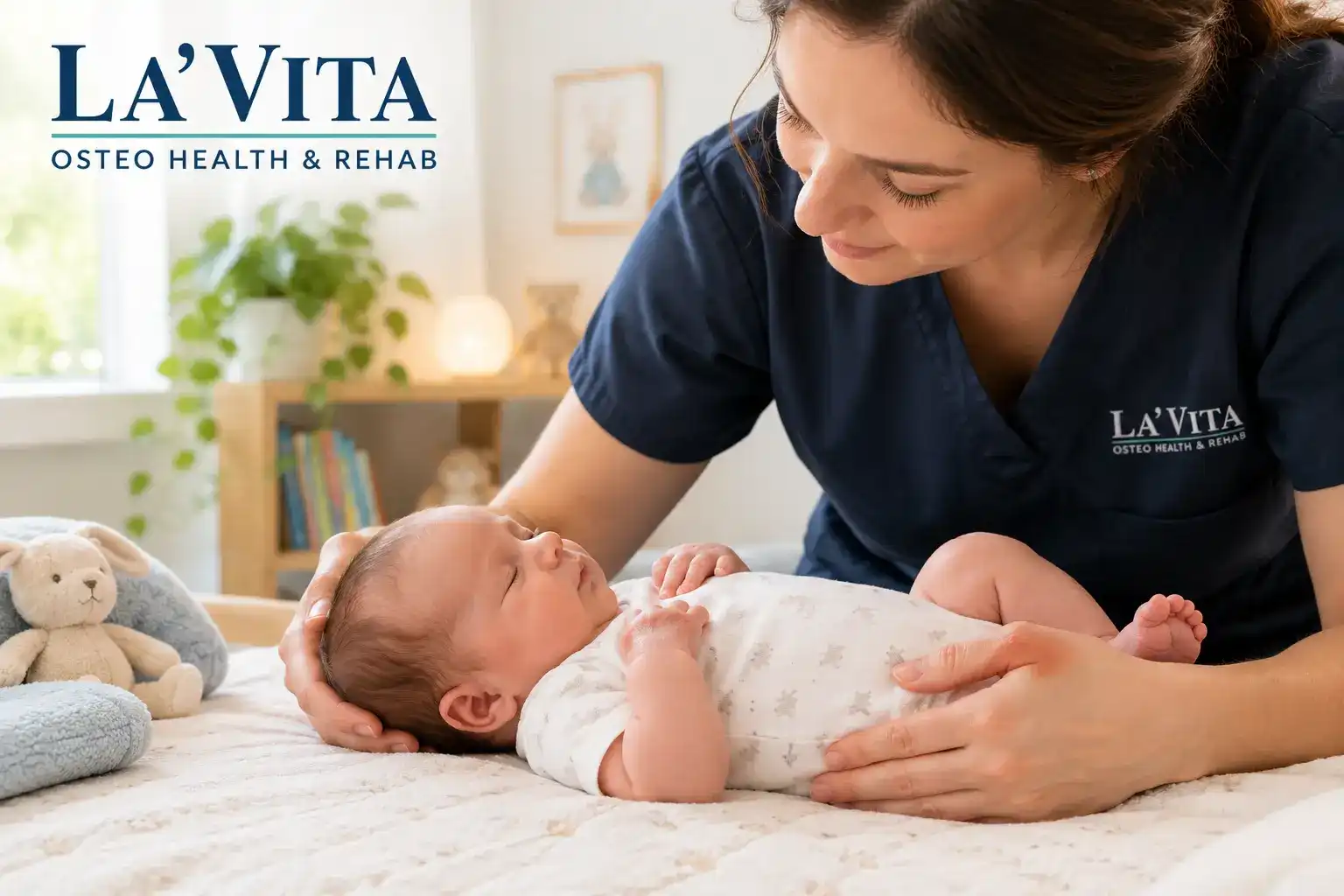
The treatment itself is known for its gentleness. You may hear the techniques described as light as the weight of a nickel . Many babies, in fact, fall asleep during a session . Practitioners use their hands to gently assess and encourage release in the baby’s tissues and joints. It is a non-invasive, drug-free way to support the body’s own healing mechanisms .
How Birth Can Contribute to Infant Tension
The journey through the birth canal is a significant physical event for a baby, regardless of how they are born. Even in a straightforward delivery, the baby’s head, neck, and spine undergo considerable molding and compression . For most babies, this tension resolves naturally. For others, it can leave behind residual tightness that interferes with their comfort and function.
Infant osteopathy is founded on the idea that this residual tension can be gently helped to release. Practitioners consider how factors like a baby’s position in the womb, a long labour, or the use of instruments such as forceps or a vacuum, can contribute to specific areas of strain. The gentle, hands-on techniques of infant osteopathy can then be used to help the baby’s body move beyond these patterns.
Birth Strain, Neck Tension, and Restricted Movement
One of the most common areas where birth strain can manifest is in the neck and upper back. Tension in these areas can restrict a baby’s ability to turn their head freely to both sides. You might notice your baby consistently prefers one direction when sleeping, or seems to have difficulty turning their head during playtime. This restriction is what practitioners call a “torticollis,” or “wry neck.” In many cases, this is not a permanent condition but a functional restriction that can be relieved.
Infant osteopathy can support a baby with neck tension. A practitioner will use gentle techniques to help release the tight tissues and restore a more balanced range of motion, allowing the baby to explore their environment more comfortably.
How Infant Osteopathy May Support Comfortable Movement
During a session, the practitioner begins with a gentle assessment. They will observe the baby’s posture and how they move. They will then use a very light touch to “listen” to the tissues . This process, sometimes called palpation, helps them identify areas of restriction or tension.
The treatment itself involves extremely gentle, focused touch. Examples include:
- Cranial and sutural techniques: To address gentle restrictions in the bones of the skull that may not have fully released after birth.
- Myofascial release: To ease tension in the soft tissues (fascia) that can pull on the spine, pelvis, or head.
- Balanced ligamentous tension: Gentle techniques to encourage the body’s ligaments to return to a state of balance.
The goal is to “encourage the body to release and rebalance,” supporting a healthy, comfortable range of motion . If you’re curious about how this approach could help your baby, explore our osteopathic services to learn more.
Infant Osteopathy and Latch or Feeding Difficulties
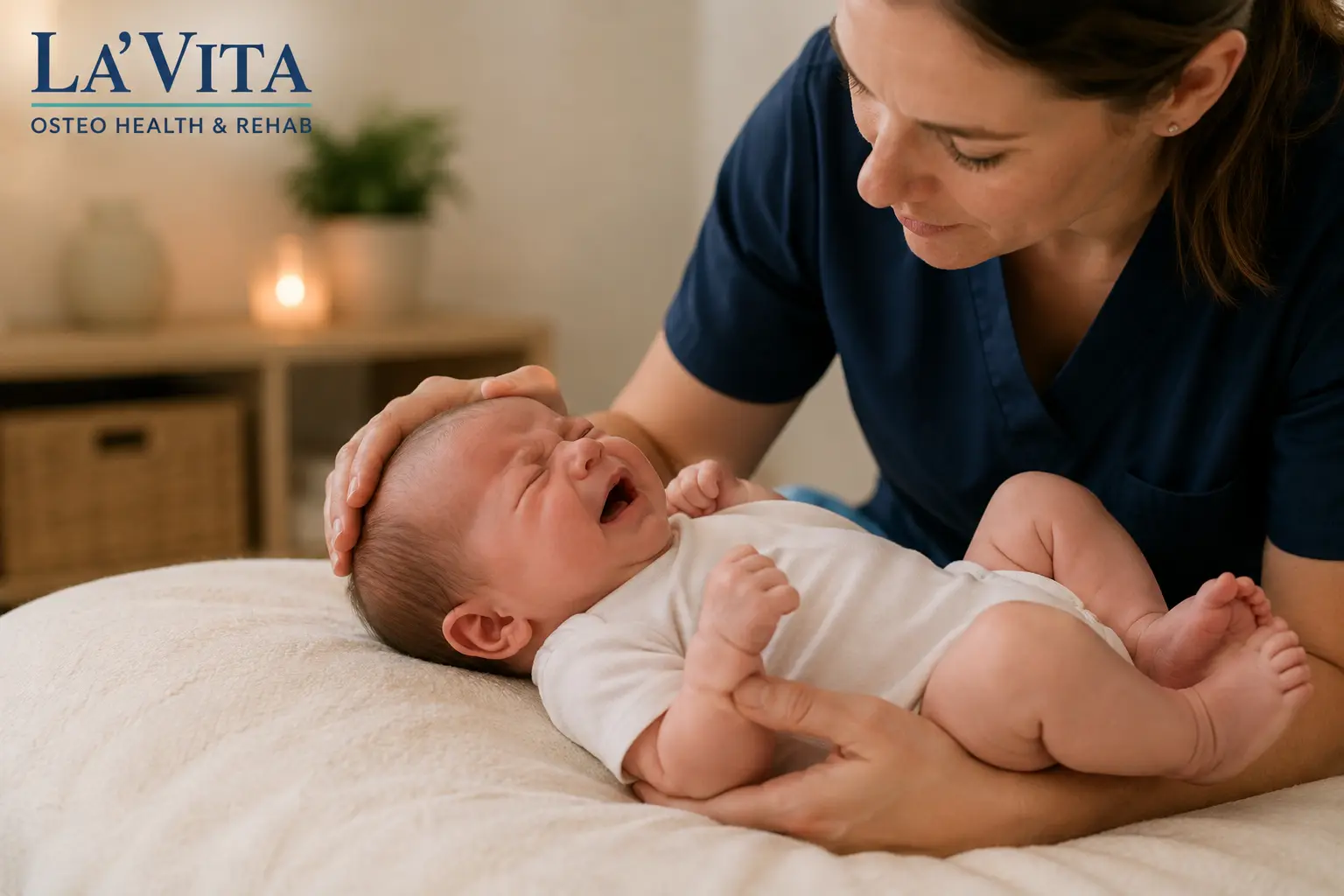
Feeding difficulties are a significant source of stress for parents. When a baby struggles to latch, seems to tire quickly while feeding, or is fussy at the breast, it can be heartbreaking and frustrating. Sometimes, these struggles are related to a tongue-tie, but often, they are associated with tension patterns in the baby’s mouth, jaw, and neck .
For example, if a baby’s jaw is tight or their neck muscles are restricted, they may not be able to open their mouth wide enough or move their tongue in the coordinated way needed to feed effectively . This is an area where infant osteopathy can be a supportive complementary approach. By releasing tension in the cranial base, jaw, and neck, the baby may be able to achieve a deeper, more efficient latch.
Infant osteopathy is often mentioned in this context, alongside support from a lactation consultant . It’s important to remember that feeding difficulties have multiple causes, and infant osteopathy is not a guaranteed “cure,” but rather one way to help the baby’s body be more comfortable and coordinated during feeding.
Infant Osteopathy and Torticollis
As mentioned earlier, torticollis is a common condition where a baby’s neck muscles cause the head to tilt to one side. This can happen because of in-utero positioning or after a birth where the neck was placed under stress. If left unaddressed, it can lead to a flat spot on the baby’s head, known as plagiocephaly .
Infant osteopathy can play a supportive role in a comprehensive plan for torticollis. Research suggests that osteopathic manipulative treatment can be a safe and effective complementary intervention for treating positional plagiocephaly . Osteopathic techniques aim to address the restrictions and imbalances in the neck that are causing the head tilt. This approach often fits well in a multi-faceted plan that also includes parent education on positioning and gentle active play to encourage head turning.
What Parents May Notice at Home
As a parent, you are in the best position to notice subtle signs that your baby might have some physical tension. You might observe:
- A consistent preference for looking to one side, especially when sleeping.
- Difficulty turning the head equally to both sides during play.
- Challenges with feeding, such as a poor latch, fussiness, or favoring one side.
- Signs of discomfort, such as arching the back, excessive gassiness, or difficulty settling.
While these signs can be concerning, it is crucial to remember that they may not be a sign of a serious problem. Many babies exhibit one or more of these signs and grow out of them. However, if you have concerns, seeking guidance is always a good next step. A professional can help you understand if infant osteopathy is an appropriate approach.
What to Expect During an Infant Osteopathy Appointment
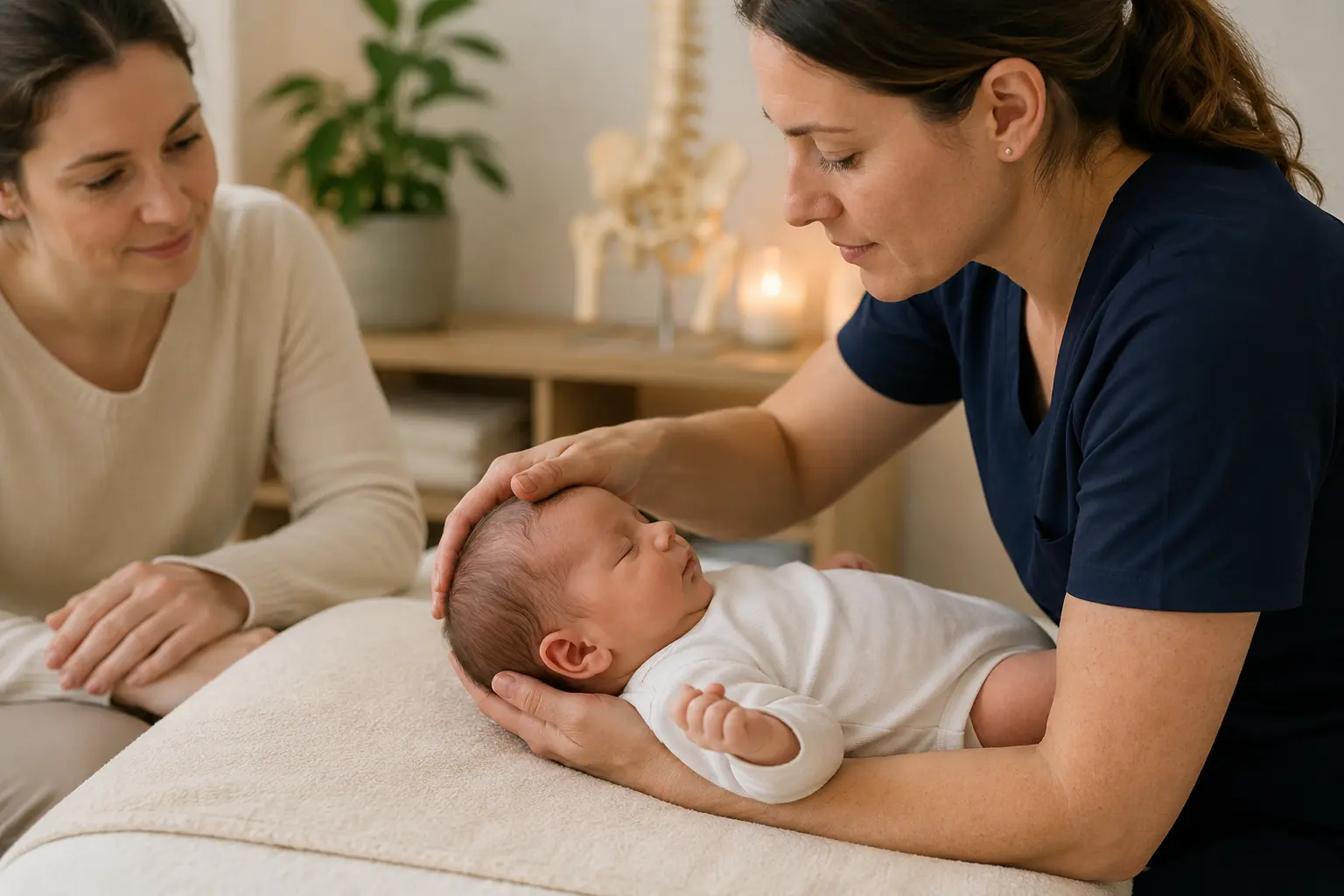
Your first appointment for infant osteopathy is usually longer—around 45 minutes to an hour. This allows time for a thorough conversation. The practitioner will ask about your baby’s health, your pregnancy, and the birth story . You will remain with your baby for the entire session.
The hands-on part of the session takes place while your baby lies on a treatment table, often just in a diaper, or in your arms. The practitioner will use a very light touch to gently assess your baby’s body and then apply the appropriate osteopathic techniques . Babies often find the work soothing and many drift off to sleep.
A good practitioner will explain what they are feeling and doing throughout the process. They will also likely give you some simple suggestions for things you can do at home, like positioning or gentle movements, to support the work .
When to Speak With a Pediatric Healthcare Professional
The safety of your baby is always the first priority. If your baby shows any of the following signs, please contact your pediatrician or family doctor immediately:
- Fever or signs of illness
- Unexplained weight loss or poor weight gain
- Persistent, severe, or worsening symptoms
- New weakness or loss of developmental milestones
- Changes in consciousness or seizures
Infant osteopathy is a complementary tool, not a replacement for essential pediatric medical care. Before seeking an infant osteopathy assessment, it is recommended that you have your baby examined by a pediatric healthcare professional. This ensures there are no underlying medical issues that need to be addressed. Osteopathic treatment addresses musculoskeletal concerns and is not intended to treat medical conditions .
FAQs
1. Is infant osteopathy safe?
Yes, infant osteopathy is considered safe when provided by a qualified practitioner who has specialized training in pediatrics. It uses extremely gentle techniques and the treatment stops if a baby shows any distress .
2. What does osteopathy treat in infants?
Osteopathy may help with feeding difficulties, torticollis (preferred head turning), plagiocephaly (flat head syndrome), colic, and general tension or asymmetry resulting from the birth process .
3. Is infant osteopathy painful?
No, the treatment should not be painful. Practitioners use very light pressure, often described as less than the weight of a nickel. Babies frequently fall asleep during treatment .
4. How many sessions will my baby need?
The number of sessions varies greatly. Some babies with mild tension respond well to 1-3 sessions. Others may benefit from a longer course of care .
5. Can I bring my baby for osteopathy without a doctor’s referral?
Yes, you do not need a doctor’s referral to see an osteopath. However, it is always a good idea to keep your baby’s pediatrician informed of all complementary treatments they are receiving .
6. How old does my baby need to be for osteopathy?
There is no minimum age. Osteopaths can treat babies from just a few days old. Techniques are always adapted for the baby’s age and size .
7. Can osteopathy help with breastfeeding difficulties?
Yes, tension in a baby’s jaw, neck, or cranial base can interfere with latching and sucking. Osteopathy may help release these restrictions, often working well as a complement to support from a lactation consultant .
Have more questions? Reach out to our team for personalized answers.
Conclusion
Bringing a new baby home is a journey filled with unknowns. When challenges like feeding issues, a persistent head turn, or general fussiness arise, it’s natural to seek answers and solutions. Infant osteopathy offers a safe, gentle, and drug-free approach that can be a valuable part of your baby’s support system. By focusing on the whole body and addressing areas of tension, a qualified practitioner aims to support your baby’s comfort, mobility, and overall sense of well-being.
At La Vita Osteo, we understand the concerns of new parents. We are here to listen and to provide professional guidance. If you are wondering whether an infant osteopathic assessment could be beneficial for your baby, we invite you to book a consultation with us. We can discuss your baby’s unique story and explore how gentle, whole-body care might support their comfort and development.