If you’re a new parent, your baby’s comfort and safety are your top priorities. When you hear about infant osteopathy, it’s natural to have questions. Will it hurt? Is it safe for such a tiny body? Does it involve forceful movements? These are valid concerns, and understanding what actually happens during a session can help put your mind at ease.
This guide is designed to answer those questions. We’ll walk you through what a gentle infant osteopathy session looks like, how practitioners keep newborns comfortable, and what you can expect before, during, and after a visit. Our goal is to provide you with clear, trustworthy information so you can make an informed decision for your baby.
Is Osteopathy Safe for Newborns?
Yes, when performed by a qualified practitioner with specialized training in pediatrics, infant osteopathy is considered very safe . This safety is grounded in two key factors: the approach and the practitioner’s training.
Safety is not taken lightly in this field. Organizations like the French Academy of Medicine have called for objective assessments of these practices to ensure they are safe and effective for newborns . Furthermore, the World Health Organization (WHO) has recognized evidence-based osteopathy for newborns as a safe and cost-effective approach, selecting a project on the topic for presentation at its Second Global Summit .
For a Calgary parent, this means seeking out a practitioner who is clear about their qualifications and is happy to answer questions about their experience with newborns. Infant osteopathy is intended to complement, not replace, the care provided by your pediatrician.
What Happens During an Infant Osteopathy Assessment?
The first step is a thorough, unhurried conversation. The practitioner will take time to understand your baby’s story, including:
- Birth history: How was the pregnancy? Was the birth straightforward, long, or assisted?
- Feeding patterns: Are there any latch issues, clicking sounds, or a preference for one side?
- General comfort: Is your baby excessively fussy, unsettled, or showing signs of digestive discomfort?
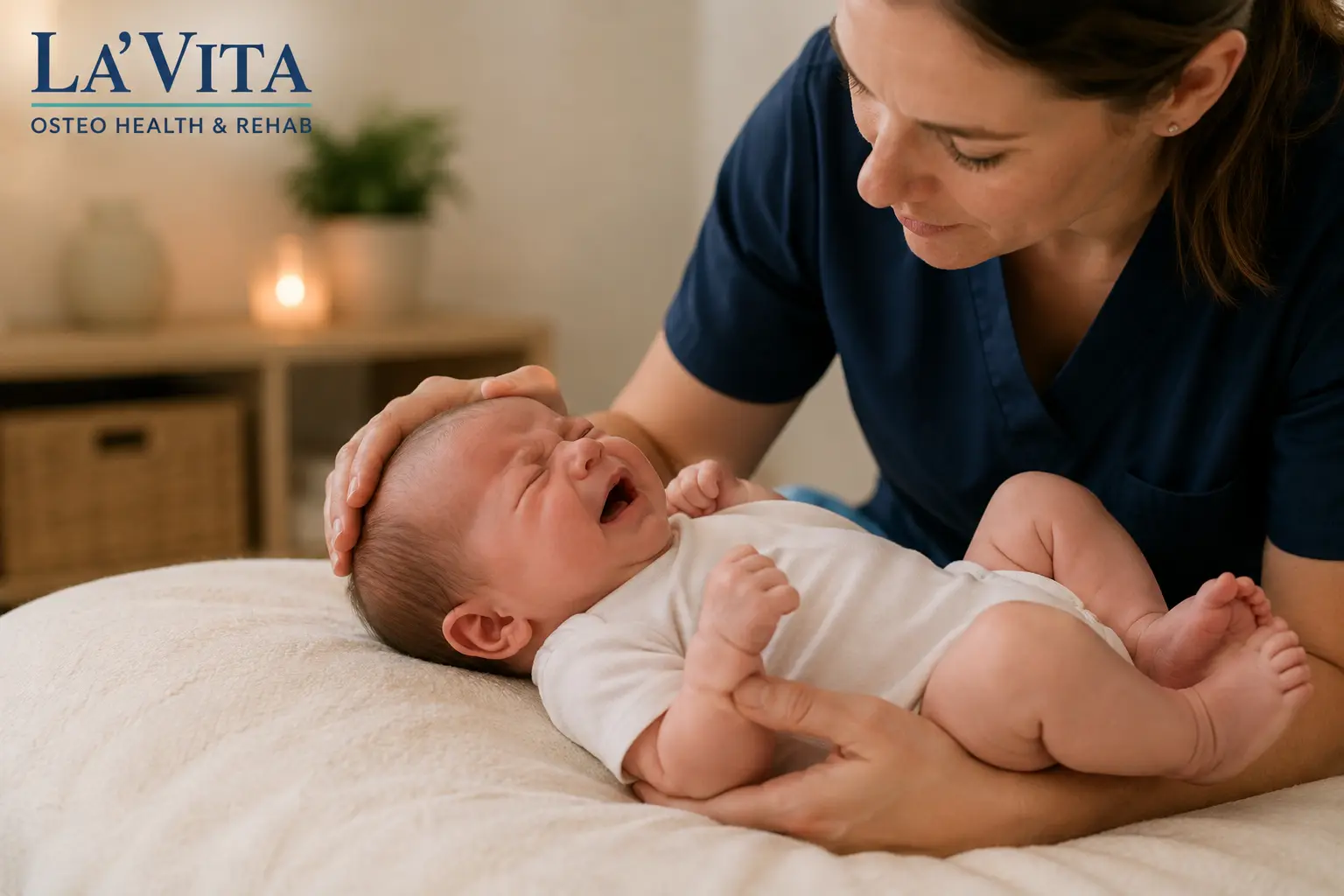
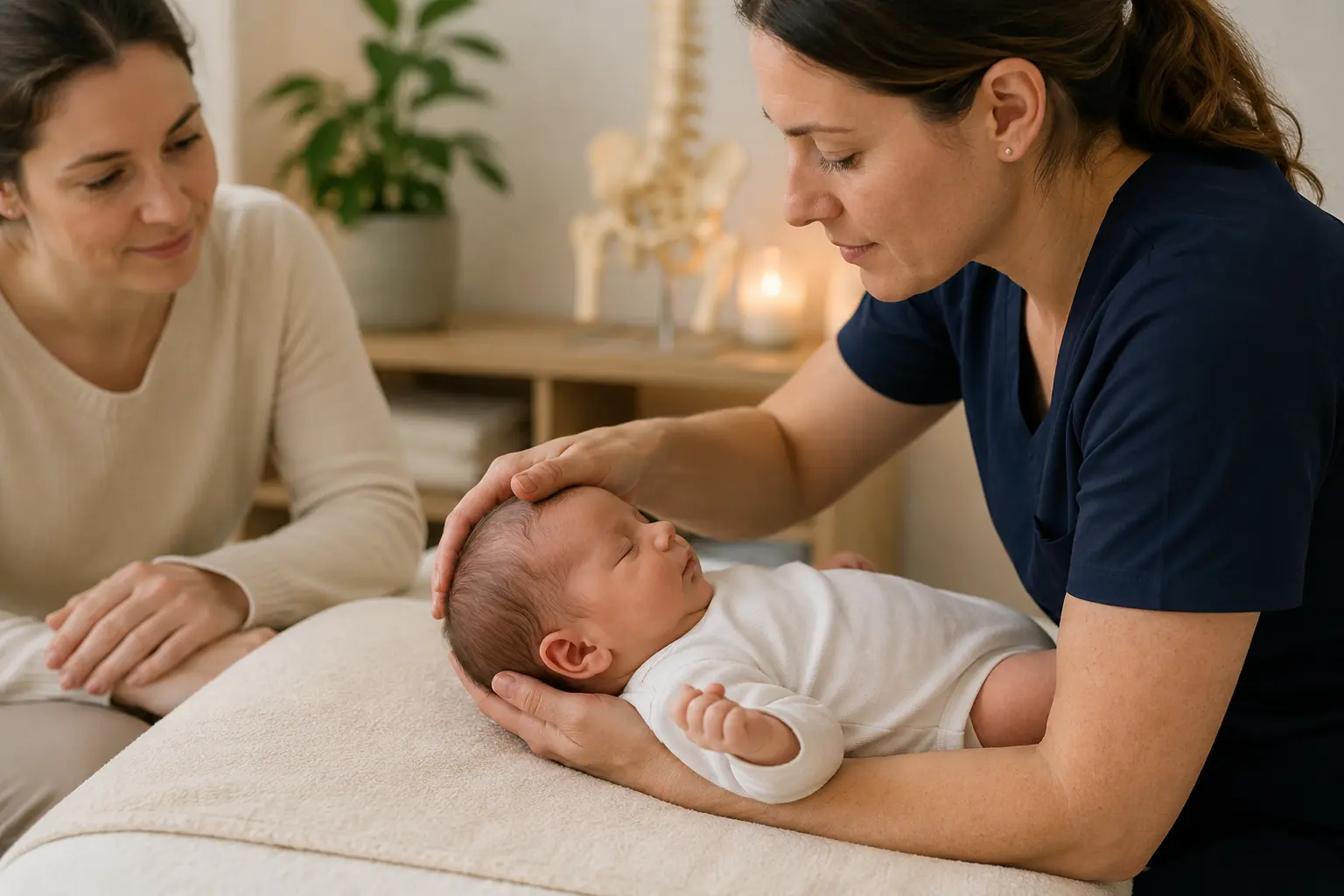
This history is followed by a gentle, hands-on assessment. The practitioner will use a very light touch to observe your baby’s posture, how they move, and where they might be holding tension. The baby is usually lying down or can even be held by you during the entire process . This assessment is always adapted to the baby’s age and size, with the practitioner’s “hands work with very soft pressure, slow, small movements, always listening to the child’s response.” .
What Does a Gentle Osteopathic Session Look Like?
An infant osteopathy session is a calm, quiet experience. It’s not a typical medical appointment; it’s designed to be soothing for your baby. You can expect:
- A Calm Environment: The clinic should feel welcoming and calm. A baby-friendly space where the practitioner can work without rushing.
- Gentle Touch: The techniques are incredibly gentle. A baby’s body is tiny and responsive, and the pressure used is comparable to what you might use to check if a peach is ripe . The practitioner may hold, cradle, or use very light fingertip pressure to encourage areas of tension to release.
- No Popping or Cracking: This is a critical point. Infant osteopathy does not involve forceful manipulation. This means there are no “cracks” or high-velocity manipulations of the baby’s neck or spine . In fact, research indicates that direct, high-velocity techniques are usually avoided entirely in very young children .
- Working with Your Baby’s Rhythm: The session revolves around your baby. If they need a feed, a cuddle, or a diaper change, the practitioner will stop and wait. The goal is to work with the baby’s natural state, not against it .
Your baby will not be overwhelmed. In fact, many babies find the experience so soothing that they fall asleep during treatment .
How Practitioners Keep Newborns Comfortable
From the moment you arrive, the focus is on keeping your baby comfortable and secure. This is achieved in several ways:
- You Remain Present: You are with your baby for the entire session. This provides your baby with a familiar anchor of safety.
- Adapted Techniques: The practitioner uses indirect or very gentle direct techniques. These methods, like craniosacral therapy, are specifically chosen because they are perceived as gentle and non-forceful by the patient .
- Hands-On Communication: A skilled practitioner “listens” with their hands. They pay close attention to your baby’s body language and stop or change their approach if the baby shows any signs of distress.
- Respecting the Crying: If your baby is crying, the session may be paused. Sometimes, crying is a way for the baby to release tension. The practitioner will work to understand the cause and will never force a technique on a distressed baby.
What to Expect Before, During, and After a Session
Here’s a step-by-step guide to help you know what to expect:
Before the Session:
- Check-in with your pediatrician: It’s always a good idea to keep your baby’s doctor informed of any complementary care they are receiving. Infant osteopathy is not a replacement for pediatric care.
- Book an appointment with a qualified practitioner: Look for an osteopath with specific postgraduate training in pediatrics.
- Come prepared: You don’t need to bring anything special, but have a list of any questions you have ready.
During the Session (It’s Unhurried):
- Intake: A conversation about your baby’s history.
- Assessment: Gentle palpation to assess areas of tension.
- Treatment: Very light, direct contact or gentle holds to encourage the body to release and rebalance . The whole process is calm and many babies relax completely.
After the Session:
- Observation: You may notice changes in your baby’s behavior in the days following a session. Some parents report their baby is more settled, sleeps more deeply, or feeds more symmetrically . Others notice a period of “catching up,” where their baby may be a bit more tired or fussy. These responses are normal.
- Ask Questions: The practitioner should give you a clear idea of what they observed and what they would recommend for a treatment plan. It’s common for a few sessions to be beneficial, but every baby is different .
If you’re considering an infant osteopathic assessment for your baby, contact our team to schedule a consultation and discuss your baby’s unique needs.
When Should Parents Speak With a Pediatric Healthcare Professional?
Your baby’s pediatrician is your primary resource for all health concerns. Osteopathy is a complementary approach and should never replace essential medical care. Please consult your pediatrician immediately if your baby experiences:
- A fever or any signs of illness
- Poor feeding or difficulty gaining weight
- Persistent, forceful vomiting
- Blood in their stool
- Any breathing difficulties
- Unusual lethargy or difficulty waking
- Any other concerning or worsening symptoms
A responsible practitioner will also let you know when you need to see another health professional . Infant osteopathy works best as part of a broader care team and is not a “cure” for any medical condition.
FAQs
1. Is infant osteopathy painful?
No. When performed by a trained professional, infant osteopathy involves extremely gentle touch. It should not be painful, and many babies fall asleep during a session.
2. Does infant osteopathy involve any cracking or popping?
No. Gentle infant osteopathy does not involve any forceful manipulation or the “popping” sounds sometimes associated with adult chiropractic or osteopathic adjustments .
3. How do I know if my baby needs osteopathy?
Some signs parents notice include a preference for turning their head to one side, feeding difficulties, latching issues, or general fussiness. However, a professional assessment is the best way to determine if your baby has physical tension that could be addressed.
4. How long does a session last?
A first session is typically longer, often around 45–60 minutes, to allow time for a thorough conversation and assessment. Follow-up sessions are usually shorter.
5. How many sessions will my baby need?
The number of sessions varies from baby to baby. Some respond well after 2–3 sessions, while others may need more . Your practitioner will discuss a treatment plan with you based on their assessment.
Conclusion
Deciding to try a new therapy for your baby can be daunting. However, when you understand that infant osteopathy is a gentle, safe, and non-forceful approach focused on whole-body comfort, it becomes a much less intimidating decision. It is not a cure for medical conditions, but rather a complementary approach designed to support your baby’s natural ability to release tension and feel more at ease.
At La Vita Osteo, we understand the concerns of new parents. We are committed to providing gentle, informed, and responsible care for your baby, always prioritizing their safety and comfort. We believe in working with you to support your child’s health and development.
To learn more about our infant osteopathy services or to schedule an initial consultation, contact our clinic. We are here to support your family’s health journey.